 Cocaine affects your brain. The word "cocaine" refers to the drug in both a powder (cocaine) and crystal (crack) form. It is made from the coca plant and causes a short-lived high that is immediately followed by opposite, intense feelings of depression, edginess, and a craving for more of the drug. Cocaine may be snorted as a powder, converted to a liquid form for injection with a needle, or processed into a crystal form to be smoked. Cocaine affects your body. People who use cocaine often don't eat or sleep regularly. They can experience increased heart rate, muscle spasms, and convulsions. If they snort cocaine, they can also permanently damage their nasal tissue. Cocaine affects your emotions. Using cocaine can make you feel paranoid, angry, hostile, and anxious, even when you're not high. Cocaine is addictive. Cocaine interferes with the way your brain processes chemicals that create feelings of pleasure, so you need more and more of the drug just to feel normal. People who become addicted to cocaine start to lose interest in other areas of their life, like school, friends, and sports. Cocaine can kill you. Cocaine use can cause heart attacks, seizures, strokes, and respiratory failure. People who share needles can also contract hepatitis, HIV/AIDS, or other diseases. Call us now and we can help you get into a treatment center for free. 1-800-513-5423 | |||
Sunday, June 28, 2015
Affects of Cocaine use

Thursday, June 25, 2015
Dual Diagnosis Treatment Programs
Dual Diagnosis Treatment Programs
This service is dedicated to those in need of a Dual Diagnosis Treatment Program for Addiction. Call for free help now. 1-800-513-5423

Dual Diagnosis treatment programs are tailor made to specifically address the co-occurring mental and substance abuse disorders. Many of the dual diagnosis treatment centers treat the individual using an integrated approach working with both the psychological and alcohol or drug dependency. Dual Diagnosis treatment programs are a relatively new approach to treat addiction and has gained acceptance and significant results in treatment co-occurring substance disorders.
Facts
The need for dual diagnosis treatment programs is growing as we discover that there is an underlying condition that needs to be handled at the same time while treating the addiction problem.
There is significant evidence that shows that almost one third of alcohol abusers and almost half of all drug addicts have a co-occurring underlying disorder.
If we look at the general population, persons with a psychological disorder are twice as likely to self medicate and developed either an addiction to alcohol or drugs.
Dual diagnosis patients will have a harder time in dealing with addiction than patients that do not have a co-occurring mental disorder. Individuals who have a mental illness and a co-occurring substance disorder have higher rates of suicide and homelessness.
Brief history of Dual diagnosis treatment programs
Dual diagnosis treatment interventions and "integrated" programs that truly adapted to the needs of severely mentally ill chemical abusers (MICA) began in 1984 (Gigliotti,1986, Sciacca 1987a,1987b) in a New York State outpatient psychiatric facility. In 1985 these integrated treatment programs were implemented across multiple program sites (Sciacca,1987b). Concurrently, treatment and program elements were taught through training seminars in New York as well as nationally. Early articles by Gigliotti, 1986 and Sciacca, 1987a, 1987b, outlined these processes and documented their starting dates. In September, 1986, the New York State (NYS) Commission on Quality of Care (CQC) released the findings of eighteen months of research. Its report (Sundram, Platt, Cashen, 1986) described the detachment and downward spiral of dual diagnosed consumers who were bounced among different systems with " no definitive locus of responsibility." As a result, Governor Cuomo designated the NYS Office of Mental Health as the lead agency responsible for coordinating collective efforts for this population. CQC proceeded to visit the dual diagnosis programs developed in 1984, and declared the treatment interventions, the training, and integrated programs to be positive solutions to the dilemmas (Gigliotti, 1986).
Form and function
For a client to succeed in a dual diagnosis program there has to be self-motivation and a desire to get better. The doctors and treatment teams must be able to work together seamlessly through a coordinated treatment approach without having to consult different departments. The approach only works through a unified effort and a co-joined treatment team.

What to look for in a dual diagnosis program
While searching for a dual diagnosis treatment program make sure that the center has all the facts regarding the client. Many times it is necessary to "wipe the slate clean", meaning that a client may need to come off of all medications first before continuing their current medication regiment. Many addicts have been put on medication by their family doctor or psychiatrist without disclosing the fact that there has been drug usage going on in the present time. Once the client has been clean and stable for 30 or so days we really see the real person and know exactly what is going on with the patient. It is at this point in treatment that a determination is made if there is a need for medications to handle the underlying addiction problem.
Help is only a phone call away our certified counselors are here to assist you in finding the best Dual Diagnosis Treatment Program
Our counselors are waiting on your call 7 days a week 24 Hours a day.
1-800-513-5423
.
Dual Diagnosis Treatment Programs help line is here to assist you. We will guide you every step of the way. Our trained and certified counselors have helped thousands of people just like you enter into a new life free of drugs or alcohol. The first step is the hardest to take, admitting that we are powerless and need help to handle the underlying addiction that has been holding us back from the life we deserve. Let your addiction become the past. Give one of our counselors a call we are here for you 24 hours a day 7 days a week.

Tuesday, June 23, 2015

Thursday, June 18, 2015
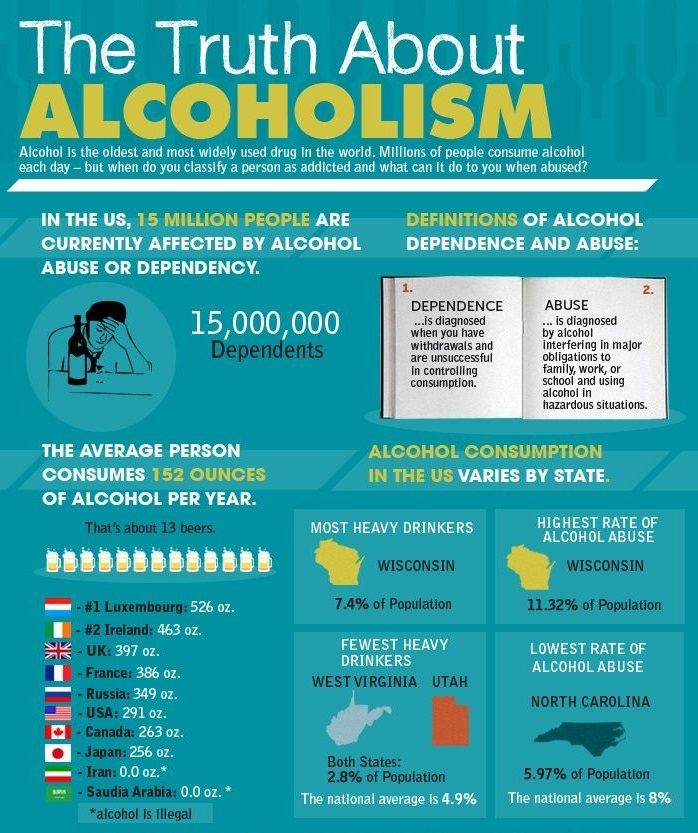
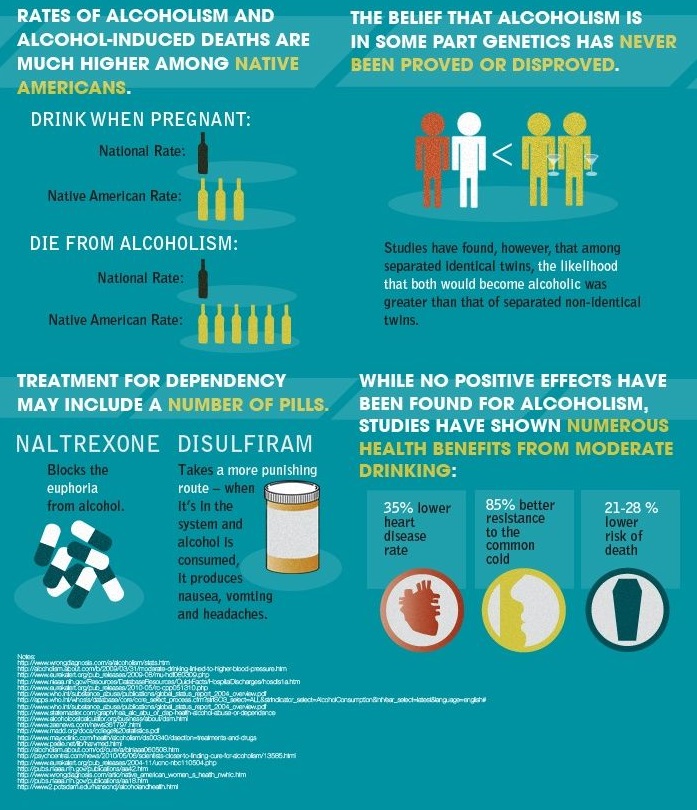
The Truth About Alcoholism
The Truth About Alcoholism
Alcohol is the oldest and most widely used drug in the world. Millions of people consume alcohol each day----but when do you classify a person as addicted and what can it do to you when abused?
This is only a guide. If you or a loved one struggles with alcoholism, call us at 1-800-513-5423. A certified counselor will help you and talk to you about your options. Call us toll free now. Or visit our website at www.drugrehabservices.com now.

Tuesday, June 16, 2015
ARE YOU AN ENABLER?
ARE YOU AN ENABLER?

Home Enabling: Are You An Enabler?
Are You An Enabler?
#DRUGREHAB #ADDICTS, #FRIENDS AND #FAMILY OF ADDICTS, #PARENTS, #WOMEN
Behind many addicts you’ll find enablers. An enabler can be a parent, a spouse or even a child, and usually her intentions are good. The problem is that loving an addict, supporting him and empowering him can often turn into enabling. When you enable the addict in your life you are only making the problem worse and preventing him from getting the help he really needs. So how do you know if you are helping or hurting?
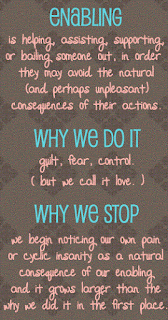
What Is Enabling?
Enabling means taking away or covering up the consequences of your loved one’s addiction. Consequences are powerful motivators. When an addict destroys his relationships, loses his job or spends all his money on drugs he is forced to face the truth about his problem with drugs or alcohol. If you take actions to shield him from these consequences, he need not face the truth and he will likely keep doing what he is doing. You are enabling him.
Put this way it sounds pretty straightforward. When you’re in the thick of it, though, it can be tough to know if you are enabling your addict or helping him. You should help your loved one. You should empower him to get help for himself. Helping an addict doesn’t always mean tough love, but there can be a fine line between caring and enabling.
Signs You Are An Enabler
Here are some surefire signs that you are an enabler:
You make excuses or lie – You cover up or gloss over bad things that your loved one is doing and make excuses to other people. For instance, you might explain away his embarrassing bender at a party by telling everyone that he was sick and the alcohol interacted badly with his cold medicine.
You take on his responsibilities – For an addict, everyday responsibilities are usually the first thing to go south. If you pick up the slack by picking up the kids from school, doing his chores, taking care of his aging mother or anything else he is supposed to do, you are not letting him feel the consequences of his neglect.
You put the blame for his problems on anyone but him – Addicts are great at assigning blame to third parties. It’s part of denial. You may add to the problem by encouraging this or telling him that he’s right. You may even blame yourself. The truth is that he makes his own decisions and he needs to realize that.
You take care of him financially – Addiction costs money. Do you give him more money when he runs out? Do you pay the bills or legal fees? Helping him financially may seem unconnected to his addiction, but it isn’t.
You avoid addressing the problem out of fear – If you are afraid to face the problem of your loved one’s addiction because you are afraid of a fight or that he will leave you, you are enabling.
How To Stop Enabling And Start Helping
If you recognize the enabler in your habits, it’s time to stop. Start with a conversation about the problem. Stop ignoring it. Tell your loved ones that things will change from now on. You will no longer take care of his responsibilities. You will no longer give him money. What you will do is support and love him. Offer to be there as he gets help or goes to rehab. Tell him and show him that you are there to help and support, but that he needs to get help. Once he starts to really feel the consequences of his addiction he will start to realize the extent of his problem.
If you or a loved one needs help with an addiction, contact us at 1-800-513-5423 today http://drugrehabservices.com/
Reference link

Home Enabling: Are You An Enabler?
Are You An Enabler?
#DRUGREHAB #ADDICTS, #FRIENDS AND #FAMILY OF ADDICTS, #PARENTS, #WOMEN
Behind many addicts you’ll find enablers. An enabler can be a parent, a spouse or even a child, and usually her intentions are good. The problem is that loving an addict, supporting him and empowering him can often turn into enabling. When you enable the addict in your life you are only making the problem worse and preventing him from getting the help he really needs. So how do you know if you are helping or hurting?
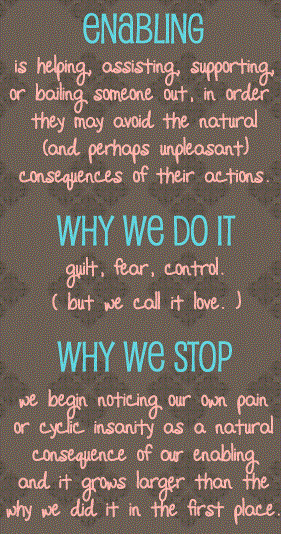
What Is Enabling?
Enabling means taking away or covering up the consequences of your loved one’s addiction. Consequences are powerful motivators. When an addict destroys his relationships, loses his job or spends all his money on drugs he is forced to face the truth about his problem with drugs or alcohol. If you take actions to shield him from these consequences, he need not face the truth and he will likely keep doing what he is doing. You are enabling him.
Put this way it sounds pretty straightforward. When you’re in the thick of it, though, it can be tough to know if you are enabling your addict or helping him. You should help your loved one. You should empower him to get help for himself. Helping an addict doesn’t always mean tough love, but there can be a fine line between caring and enabling.
Signs You Are An Enabler
Here are some surefire signs that you are an enabler:
You make excuses or lie – You cover up or gloss over bad things that your loved one is doing and make excuses to other people. For instance, you might explain away his embarrassing bender at a party by telling everyone that he was sick and the alcohol interacted badly with his cold medicine.
You take on his responsibilities – For an addict, everyday responsibilities are usually the first thing to go south. If you pick up the slack by picking up the kids from school, doing his chores, taking care of his aging mother or anything else he is supposed to do, you are not letting him feel the consequences of his neglect.
You put the blame for his problems on anyone but him – Addicts are great at assigning blame to third parties. It’s part of denial. You may add to the problem by encouraging this or telling him that he’s right. You may even blame yourself. The truth is that he makes his own decisions and he needs to realize that.
You take care of him financially – Addiction costs money. Do you give him more money when he runs out? Do you pay the bills or legal fees? Helping him financially may seem unconnected to his addiction, but it isn’t.
You avoid addressing the problem out of fear – If you are afraid to face the problem of your loved one’s addiction because you are afraid of a fight or that he will leave you, you are enabling.
How To Stop Enabling And Start Helping
If you recognize the enabler in your habits, it’s time to stop. Start with a conversation about the problem. Stop ignoring it. Tell your loved ones that things will change from now on. You will no longer take care of his responsibilities. You will no longer give him money. What you will do is support and love him. Offer to be there as he gets help or goes to rehab. Tell him and show him that you are there to help and support, but that he needs to get help. Once he starts to really feel the consequences of his addiction he will start to realize the extent of his problem.
If you or a loved one needs help with an addiction, contact us at 1-800-513-5423 today http://drugrehabservices.com/
Reference link
Monday, June 15, 2015
Clean And Sober by Janet Mullaly
Clean And Sober
by Janet Mullaly
Staying clean and sober
is the way i want to be
But it is not so simple
As you can plainly see
For some of us it takes some time
To master all the steps
To recognize our problems
even harder to accept
Patience is a virtue
in fact, it is a must
So I'll believe in a Higher Power
and in him I'll put my trust.
A spiritual awakening
is what it's going to take
if it's clean and sober
my life I wish to make.

Thursday, June 11, 2015
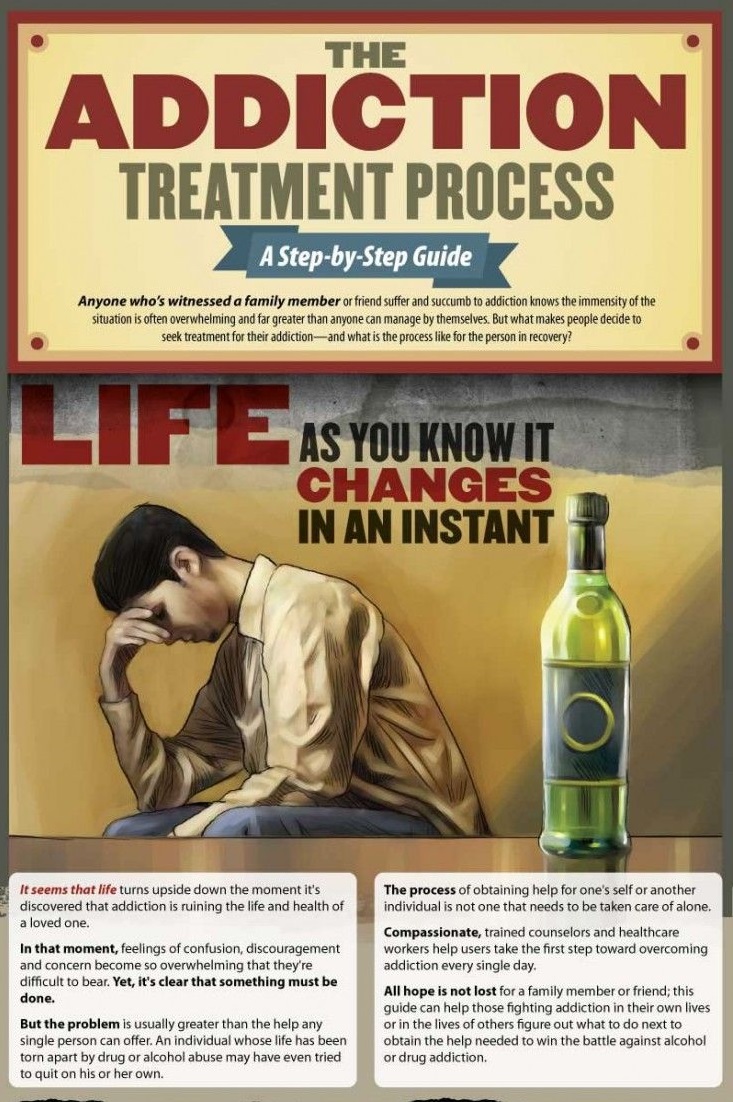
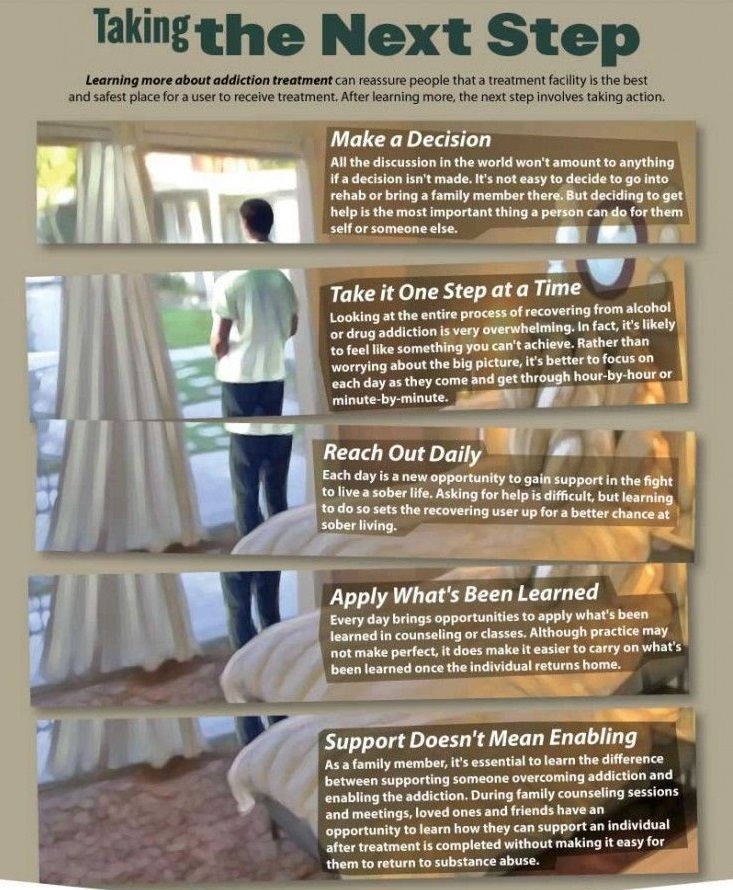
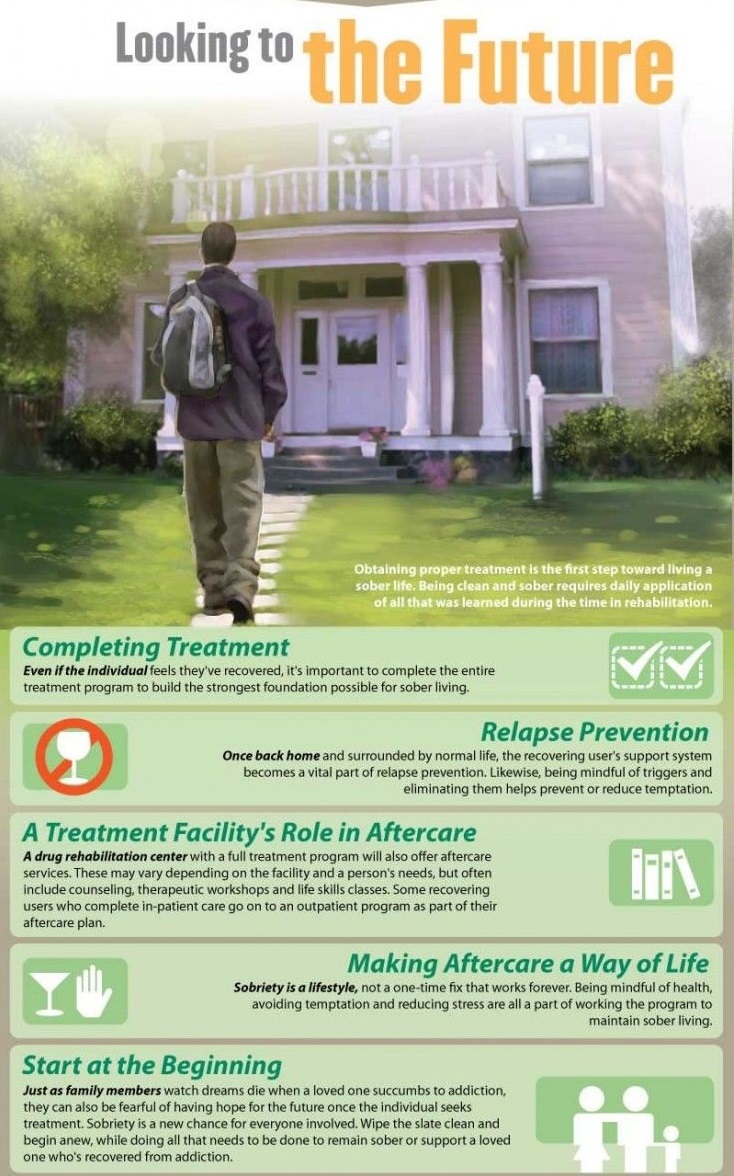
The Addiction Treatment Process: A Step By Step Guide
This is a step by step guide to help you through the addiction treatment process. This is helpful in getting help for a loved one, however, it is only a guide. If you or a loved one needs help finding treatment for addiction, please contact up at 1-800-513-5423 today. www.Addictionnomore.com



Subscribe to:
Posts (Atom)