Showing posts with label eating disorders in teen girls. Show all posts

Friday, October 23, 2015

Rehab for Teen girls Help Line -Teen Substance Abuse Treatment Options

 free drug rehabs for teenagersTeen Girls More Vulnerable to Alcohol and Drug Use  

Thursday, October 15, 2015

5 Myths About Relapse

5 Myths About Relapse

5 Myths About Relapse

Misconceptions can be persistent and pervasive. In complicated topics and situations, communication often becomes a game of schoolyard telephone where the final product is garbled. Addiction and relapse are two such complicated topics that are marred by myths.
Unfortunately, myths about relapse can be dangerous and prohibitive.
Here are 5 relapse myths that we need to dispel right away:

 1. Relapse is a single event.

Contrary to popular belief, relapse is a process not always a single event. During that process, there are often warning signs in the recovering person’s attitude and behavior.
A relapse begins long before a person actually returns to drinking. A recovering person will usually start thinking and behaving in the same way they did before, while in the grips of their addiction. They can experience a shift in attitude and decide that recovery just isn’t as important to them as it used to be, or they could start to deny they ever had a drinking problem at all.
Learn the signs of relapse and keep it at bay. Remember why you started this recovery journey in the first place and keep some affirmations handy for when the going gets tough.
Most importantly, when you need help, reach out and get it.

2. Relapse Means Failure

Wrong! Wrong! Wrong!
Recovery is ongoing. If you or someone you know relapses, it is completely possible to get back on the path to recovery.
A relapse cannot destroy all of the hard work you’ve put into recovery thus far. Relapse is not the end of your sobriety journey.
The difficulty of restoring recovery will often depend on how far into the relapse you’ve gotten. If you catch a relapse early enough, you may be able to benefit from a quick turn around. But if you’re deep into a relapse before it’s discovered, you may need to enter or re-enter a treatment facility. No matter the depth of your relapse, you CAN restore your sobriety and get back on the right track.

3. People Who Relapse Just Aren’t Motivated Enough

Conquering addiction requires more than just motivation. Sustaining sobriety takes an enormous amount of willpower and willingness to adapt. But anybody can relapse. And the process can be triggered by things like strong emotions, difficult situations, or tempting environments. 
It doesn’t matter if you’re 20 years into sobriety or 20 days in. Mistakes happen, relapses happen. It has less to do with motivation and more to do with how prepared you are for the worst-case scenario. Relapse is a real threat for everyone, that’s why recovery is a lifelong journey.

4. Someone Who Relapses Just Hasn’t Hit “Bottom” Yet

There is no prerequisite “bottom”. Thinking this way perpetuates the dangerous idea that some people are not yet worthy of treatment.
If you feel like you’re sick enough to seek treatment, then by-golly you’re sick enough to seek treatment!
You don’t owe any particular amount of pain and suffering before you’re worthy of recovery. A relapse is a relapse. Anyone can slip up.
The most important part of relapse is your response. Make sure there are people holding you externally accountable for your recovery. Find support in other people who are seeking sobriety. If you have built a good support structure, people will notice changes in your behavior or if you withdraw. If you’ve prepared them for all possibilities, they will be able to intervene and help you.

5. We Shouldn’t Talk About Relapse

Did I say wrong already? Because this is so crazy wrong!
You know that expression “the best offense is a good defense”? Well it rings true in the addiction world. To avoid relapse, you should know as much about it as possible.
Talking about relapse won’t make it come about anymore than talking about a new car will make one magically appear in your driveway. How will you noticed the warning signs if you don’t even know what they are? Talk about it and talk about it often. Tell the people in your life what a relapse might look like and get them in your corner. Help them help you.
Tune into your mental state and be conscious of your behavior so that you’re able to recognize the signs of relapse. If you start seeing those signs, ask for help, sooner rather than later.
I’m not here to condone relapse. I’m here to tell you recovery is possible no matter what kind of bumps you hit along the way.
Knowledge and honesty will be your best weapons in the fight for sobriety.
Understanding the truth about relapse is the first step to avoiding one.

WRITTEN BY 

Shelby Hendrix is a blogger from the Northern Midwest with close personal ties to the addiction world. She focuses on the addiction landscape to reach out to those fighting alcoholism and compel them to seek an informed, healthy recovery.

Thursday, September 17, 2015

Bulimia Nervosa in Teens

Teenage girls with bulimia is becoming a growing issue in this day in time. If your daughter has an eating disorder, now is the time to get her help, before it is too late. 
Call us at 1-800-819-9973 

teen drug rehab centers
Bulimia Nervosa
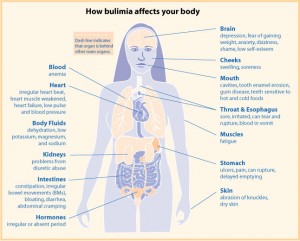
my daughter has bulimiaYoung girls with bulimia binge eat large portions of food, then shortly after excuse themselves and while out of sight and earshot, they purge their food by induced vomiting. This practice can be extreme; with  self induced vomiting and the consumption of large quantities of food, putting the teens body in distress. Laxative and binge exercising can be associated with this disorder as well.
teen drug rehab centers
free drug rehabs for teenagers
teen drug rehab centers
Signs, Symptoms, and Consequences
teen drug rehab centers
Stomach and intestinal distress— Inflammation of the stomach lining and gastritis are common among those who binge eat and purge, due to the stress on the system. Abusing laxatives alters the bodies chemical balance robing it of essential minerals and fluids. This leads to the digestive tract and lining becoming damaged, and eventually burns out the colon. In severe cases, the colon must be removed.
teen drug rehab centers
Esophageal Injury— Repeated purging releases bile and acid to rise from the stomach, which can irritate and lead to inflammation of the esophagus, narrowing of the throat passageway, and in some cases tearing the lining of the esophagus which can lead to a fatal rupture.
teen drug rehab centers
Tooth Decay and Rot—- Vomiting increases the mouths ph level making it more acidic resulting in erosion of tooth enamel and dentin.
teen drug rehab centers
Kidney and Heart Problems—- When a person binges and purges, this has a profound effect on the vital mineral intake and fluids that we need to run our bodies. Food and fluid intake is the fuel that runs our bodies and denying the body of these vital key elements and minerals can lead to the shutting down of essential systems. Low potassium levels and what can become chronic dehydration, will eventually lead to kidney distress and eventually failure of the organ completely. With the frequent vomiting, associated with Bulimia, it brings with it higher than normal alkali levels in the blood stream and the body tissue itself. High potassium levels and severe alkalosis can lead to irregular heart rhythms and cause sudden death in some teenage girls.

To get your son or daughter help for an eating disorder, call us at 1-800-819-9973 now