Showing posts with label recovery. Show all posts

Wednesday, March 16, 2016

What is Recovery?


What is Recovery?


Guideline for long lasting recovery from drugs and alcohol
The first step in recovery is learning and deciding that there is a need for a change.
  • Learn what treatment options are available
  • Find help and support.
  • Make your sobriety last by building a purposeful life
  • Never loose hope
  • If you fall back pick yourself up and start again
Get help with addiction
To find long lasting recovery it takes a few steps to maintain sobriety 
First you have to realize that there is a problem that needs to change. Are you ready to start your recovery? If you are ready give us a call toll free 1800-513-5423 for immediate help in finding a drug rehab or treatment center for you or a loved one. 
Deciding that addiction recovery is needed and you want to make a change is the crucial step in recovery. No matter what brought you to the decision that you need make a change for the better, making the decision for change is the only thing that really matters. For some of us, it takes us landing in some sort of rock bottom that we feel that is as low as we will allow ourselves to get, in order to feel the need for changing our alcohol or drug habits.


Making lifestyle changes and breaking behavioral habits
Changing your habits can be a lot harder that it seems, we are creatures of habit and making habitual changes has to start with changing the way we think and how we act on the thoughts that we cannot control. Simple changes that you can implement to help your recovery.
Find ways to help you manage stress
Change your friends to those who support your newly found sobriety.
Rediscover what you like to do for fun 
Change how you view yourself
helpline for rehab
Finding treatment options and support 
Some people will make the decision to enter into treatment for their addictions themselves. There are a few different options available for  the treatment for addictions. Choosing to get help to handle an addiction to drugs or alcohol can be a critical second step in the recovery process.
 
Inpatient treatment centers: This style of treatment can include long term programs,short term programs and many different specialized treatment options. Receiving treatment at an inpatient treatment center allows the individual to recover in a loving and caring environment while receiving treatment for their addictions. 
Outpatient treatment programs: This style of rehabilitation sets treatment scheduled on a regular basis from daily meetings and therapy to once a month depending on the level of care you choose. Some of the other types of outpatient treatment include partial hospitalization programs and intensive outpatient treatment, which is mainly used for people that need medical care and psychiatric treatment while undergoing a substance abuse treatment program. These types of programs are heavily monitored and often times, accompanied by sober living arrangements to offer a better level of support than a traditional outpatient program.

dual diagnosis rehab centers in my state
Dual diagnosis Treatment programs: Most dual diagnosis treatment centers are inpatient treatment with a heavy focus on mental health and underlying mental health problems that have not been previously addressed. Treatment at these centers are usually longer than the typical 28 day treatment center. 
Many of the programs that help people recover from drugs or alcohol will incorporate the 12 steps to recovery. Twelve step programs help people who are struggling with addictive behaviors. Twelve step programs like AA, NA, CA  offer support for the individual in the form of meetings and fellowship with people striving to remain drug or alcohol free.
It doesn’t matter what program you choose for you treatment; you are gonna need help in recovery to avoid common pitfalls in early recovery. This is the important third step in recovery; talking to your friends and family about your intentions to change your life. Trying to hide your recovery can make things more difficult for you, your friends, and your family.
It may encourage you to know that people will support you and you should welcome the help in your time of need. You need to take charge of your recovery and be very proud of the fact that you are changing your lifestyle habits for the better. 

entering into rehab
Find recovery groups
There may be cases when the family or friends contributed to your addiction problem either directly or even indirectly (enabling you to be addicted). In these cases it is extremely important to find like minded people to help with support and introduce you to new social outlets that support recovery.
Make your sobriety last
 
Getting free from drugs or alcohol through a drug rehabilitation program is a great first step in recovery, but managing your recovery can take planning and execution of the aftercare program you have set up for your return home.
Know your triggers and learn to manage cravings.
One of the biggest parts in early recovery is learning to manage cravings and the thoughts of using again. Being able to identify triggers, environments, and staying away from people that are using drugs or alcohol will help you stay on your path of recovery. 

rehab centers that are private
Make sure to avoid places where drug or alcohol are present.
Avoid people that you used to drink or use drugs with.
Enroll and follow through with your aftercare program. After care programs can include some or all of following groups or programs.
  • Support groups
  • Halfway or sober-living houses
  • 12 step recovery programs
  • Continued outpatient care
  • Find activities and hobbies that you enjoy and give you a sense of well being.

inexpensive drug rehab
The final step in recovery is the rebuilding of a new life without the need for drugs,alcohol or any addictive behaviors. This is not a simple as it seems. We are habitual beings that can fall back to what we feel is a safe place. Some people feel the need to give back and volunteer in their community and others take up hobbies and activities for their fulfillment.
Making sure to set reasonable goals and following through until they are completed to your satisfaction fuel us for the next goal and it’s challenges. Life takes a lifetime to complete so do not rush into anything to fast take your time and make sure that the decisions is the best for you and not the best for right now. 
drug rehab centers for women onlyWhat to do if you relapse after going to treatment 
Relapse can be a part of some peoples recovery but it is not always the case. If you find that you have fallen back to you addictive behaviors you know what to do to pick yourself back up. You have all the tools that you need to get yourself back on the track of recovery. 
Relapse can be caused by many things but the most common cause that we have noticed is boredom. Being an addict can have a great impact on your social life and in some cases, need as much time as a full time job. That is a lot of time to fill, so getting into aftercare and managing your time in order to include some activities that you enjoy on a daily basis, will help you stay the course of recovery. 
If you are ready to start your recovery program give us a call 1-800-513-5423 to find the substance abuse program that is right for your needs while enrolled in a drug rehabilitation program.

Monday, March 14, 2016

Signs You are Enabling An Addict

am i an enabler

Monday, December 14, 2015

Hard Truths about your Old Friends

Hard Truths about your Old Friends 

RE BUZZ
The first step is complete. You have chosen to get help for your addiction and the recovery process has started. It’s common to think back to your old life and friends during recovery. You may reminisce about some of the great times you had together and even look forward to seeing them after your recovery program has ended. However, the problem with your “old friends” is that they may not be a good influence on you and could even lead to relapse. Accepting the hard truths when it comes to your previous social life may help you stay sober for the long term.

Hard Truth #1- You shouldn’t hang out with them

The truth is that some of your old pals won’t be ready to give up addiction like you are. It’s extremely unlikely that you will hear them admit that or the fact that they are a bad influence on you that could lead to your own relapse. If you continue hanging out with them you are going to put yourself directly in the path of temptation and your sobriety is too important to let this situation ruin it.

Hard Truth #2- Your life was a mess when you were using drugs

Your “old” friends aren’t going to tell you about how horrible your life was when you were using because they are still trapped in that world. While you chose to overcome addiction and better your life because you knew it was problem, they just aren’t there. Many of those friends will try to tell you stories of the “good old days” when you were using and the amazing times you had with them. The stories could make you want to use, and again, your sobriety is too important.

Hard Truth #3- Your friends stole from you

Now, while this can’t be said of every “old” friend you may have had, many of them would be guilty of this. If you roomed with another addict or even dated another addict, chances are they stole money from you when they needed a fix. If you look back and remember what it was like to “jones” for more drugs, you can probably also remember how tempting it was to steal items of value or money from anyone around in order to pay for more drugs.

Hard Truth #4- Your friends lied to you about their lives

When you were addicted and you had to talk about your current situation to family or friends that didn’t know about your addiction, you lied. Your friends that are still using are still lying. It’s possible that they will say things like, “It’s not that bad,” “I can quit anytime,” or “My life is great. I’m so happy.” You know from experience that it is that bad, that if they wanted to quit they would, and most likely they are miserable. Sobriety is a long, complicated road with twists, turns, and bumps. Accepting the hard truths about your friends is a part of that journey. You have chosen to get clean and change your life, so don’t let the pressure you may feel from those still using deter you from your path. You can overcome addiction, one step at a time.

Sunday, November 22, 2015

Private Drug Treatment


Private Drug Treatment programs can be expensive, but you will receive the highest quality care and private rooms, at some of the facilities, while receiving treatment for drug or alcohol addiction.

Private recovery centers have a lower staff to patient ratio allowing more one on one treatment to be administered while enrolled in a private treatment program. Having to operate for profit, unlike state run facilities, this makes them accountable to deliver the best results possible. finding a private recovery program in your state or region that fits your needs can be difficult though so it may be necessary to seek private treatment outside of your area. If you are in need of treatment or looking for a private treatment program for a loved one give us a call and we can refer you to the best drug or alcohol treatment program and get you the help you need.

For those struggling with either addiction to alcohol or other drugs there are great private drug rehab center options throughout  the country. Private drug rehabs can be expensive, but you will receive the highest quality care and private rooms at some of the facilities while receiving treatment for drug or alcohol addiction.

Regardless of your financial or social status addiction and the temptation to abuse drugs or alcohol does not discriminate. Once a person gets addicted to drugs or alcohol, there is almost always depression that soon follows addiction and the need for treatment becomes a necessity. While in Treatment at an inpatient private rehab center the client receives scheduled focused treatment plans in an environment that is conducive to the healing process. Private room rehab centers allow for reflection after therapy without the distractions of a roommate. Making the right choice, requires educating yourself, as to which private treatment program is right for you or a loved one.

Choosing treatment options Inpatient treatment vs. outpatient treatment.
If you are looking for treatment for yourself or maybe someone that is close to you having all the facts concerning the addiction can help us determine if there is even a need for inpatient treatment at a private drug treatment program. Residential drug rehab facilities are more expensive and have a minimum time requirement for receiving treatment.

If any or all of these apply to the individual, you should look into private rehab treatments

Long history of drug or alcohol abuse

Failed attempts at inpatient treatment or outpatient treatment

No family or friend support close to the person needing help

Underlying psychiatric condition ( depression, personality disorders, anxiety issues)
need for confidentiality

How do I find an effective residential treatment program that specifically addresses my addiction?


     When evaluating treatment centers it is important to make sure that your addiction can be handled at the facility that you choose. Different drugs can require different treatment models as well as detoxification to make the treatment effective.


                   Call Now, Our counselors are here to help you

                                            1-800-513-5423


 What can be Treated


Inpatient treatment programs set their treatment focus on the two main aspects of treatment:

 Alcohol or drug abuse and behavioral conditions. These two main areas of concern can often times be the reason for the other condition. The first step in the treatment process is detox- Private detox centers help the person by first limiting access to the substance of abuse, often times this can be done without medications and letting the body rid itself of the harmful substance. Medications may be necessary depending on several factors and will be administered to the client in strict scheduled intervals due to the fact that some withdrawal medications can be habit forming. Some drugs like Heroin or opiate based drugs will usually require a full medication assisted detox protocol.


The length of treatment at an Inpatient treatment program


The stay necessary for treatment at a private room rehab program can vary from treatment program to treatment program. Program length is usually  in 30-90 day intervals, with some programs lasting as long as a year. 30 day treatment programs are typically for people seeking treatment that have had no prior attempts or underlying psychiatric conditions.


Traveling for treatment or staying close to home


In some cases traveling for treatment can be a good choice and in other cases it may be a hindrance to the recovery process. Traveling for treatment can be helpful to those seeking complete confidentiality, or just need to get away from the area that they were using in. For those that need an intervention to get them to agree to enter treatment, getting them a plane flight away removes the temptation to check themselves out of treatment before the program is completed.


Paying for a private room treatment program


A obstacle for some people wanting a private room while undergoing treatment for addiction to drugs or alcohol is paying for the treatment . Often times treatment can cost thousands of dollars. Some treatment programs do offer financing options or Insurance may cover most, if not all of the costs associated with treatment at a private facility.


Benefits of receiving private treatment over state funded type treatment centers.


Less conflict and disruptions. A private bed treatment center reserves the right to set their own rules as to the handling of disruptive clients that become hostile towards staff or other patients before there is an incident. A private center has the right to refuse service to patients if it is in the best interest of the center to maintain a high level of respect and peace for those that are dedicated and focused on their own recovery.

    The contact form  is provided free of charge along with our services to help you better understand the options that inpatient treatment centers offer.


Are residential treatment centers confidential?

We have found that some treatment centers are better at confidentiality than others. There are treatment centers that hide their true identity as resorts and vacation rentals to help people that need anonymity. People that need this level of privacy might want to look into these types of programs so no one finds out that they are looking for treatment to handle their drug or alcohol addiction.
Give us a call If you need to locate a private inpatient drug and alcohol treatment center Free of charge
                                                  1-800-513-5423


Tuesday, October 27, 2015

Handling a loved one with Addiction Problems Part 1

How To Handle A Loved One With An Addiction – Part 1


There is no easy way to approach, handle or talk to a loved one struggling with addiction.
If you have an addict in your life, expect it to be difficult, awkward and uncomfortable. There will be good days and bad days, there will be small successes followed by perhaps greater setbacks. You will be pushed to your emotional limit and you will be forced to face your own inability to change a person you love. You will be wholly incapable of making him see that what you want is what’s best for him.

Helping Those Dealing With Addicts

Dealing with addicts isn’t intuitive. We don’t simply discern how to get through to them or how to interact with them based on common sense or reason. While respecting addicts as people, it will help the non-addicts in their midst to understand that reason, good sense, morality and self-preservation are no longer part of a framework within which they operate or a common ground upon which to meet.

How to Handle A Loved One With An Addiction - Part 1 - Copy

But that doesn’t mean we write addicts off as crazy and give up hope. Having been an addict myself, I had a lot of people around me trying to help or cure or fix me in different ways. From the vantage point of recovery, I can now look back and comment on what was helpful and what wasn’t. Even a decade later, I remember how the people around me treated me when I was drowning in the despair of my addiction. While nothing you say will make or break an addict’s chances of recovering, there are ways of communicating and interacting that are harmful and pain-inducing, and there are better, more helpful ways of trying to relate to a person who is indeed quite sick.

What Not To Do When Dealing With An Addict

Guilt Trips

Yes, the addict is making everyone’s life difficult and causing a lot of unnecessary pain and suffering. She breaks plans, she fails to keep her commitments, she is unreliable and unpredictable. And guess what: she already knows it. Asking things like, “Do you realize what you are doing to your mother?” or, “Don’t you understand how you are hurting us?” are not helpful. The addict, though selfish in the extreme, is not oblivious to the pain, difficulty and chaos she is bringing into the lives of those around her. But she is not able to stop it. A guilt trip presupposes that the person being guilted is acting deliberately or out of malice. It assumes that he or she has some control over the offending behavior. An addict does not.

Bargaining

You’ll do anything, make any promise, as long as the addict will agree to stop the addiction and get help. But the addict is powerless to take you up on that offer. The addiction is boss. As appealing as your offer might be, it simply isn’t possible. Addicts are known for high-stakes gambling. They gamble their families, their jobs and anything good they can claim. They know what they have to lose and they do it anyway. They don’t do it because they don’t care; they do it because the illness is in fact that powerful and enslaving.

Endless Pleading And Cajoling

This is also known as nagging and it is never helpful or effective. It’s not that the addict doesn’t care, it’s that she cannot stop what she is doing on the basis of your wishes—even if she wanted to. The disease is a lot stronger than that. It’s a lot stronger than she is. In the end, the addict may tell you what you want to hear, but then go back to business as usual. She knows you think there is a problem. You don’t have to continue to restate it.

Implying Fault Or Agency

Loved ones must burn into their minds that both substance and process addictions are not choices that the addict is making. As a result, blaming addicts or implying that they are practicing their addiction simply because they are selfish and unloving is not only incorrect, but cruel. Understand that the addict is in the grip of something much bigger than him or herself. Addiction is an illness like diabetes or cancer. You may hope that addicts will take the appropriate steps to manage the condition, but it is unhelpful to imply that they do what they do on purpose.

Ignoring The Issue

If there is nothing that can be said to make an addict want to seek help, and if the nagging and the pleading are ineffective, does that mean it’s better to say nothing at all? Is it better to ignore the issue, make the best of it or hope it all just goes away? No. Something does indeed need to be said and maybe even done, but the ways in which you speak and act hold the difference between showing genuine love and support, and being a nuisance and a nag.
While your words and expressions of concern may not effect immediate change in the addict’s life, while they may not leave your chat promising to check into treatment, the addict will benefit from the knowledge that you cared enough to say something out of concern and love. Don’t pretend there isn’t a problem.
If you or a loved one is seeking help for 
addiction, give us a call at 1-800-513-5423 


Wednesday, October 14, 2015

Alcohol and it's effects

Alcohol


Alcohol


Alcoholics usually do not know they are out of control.
Alcohol is one of the most sinister of drugs that draws a thin, usually imperceptible line between social use and addictive use. People often do not know when they have become addicted to alcohol - when casual drinking turns to dependency drinking and finally to biochemically-controlled drinking. Indeed, alcohol addicts often rely on alcohol as a crucial component of their personality - without a drink, they simply cannot be themselves. Where can I find help for an Alcohol Addiction? Right here, this is the site that will help you find the help you need.
Family members often try to protect an alcoholic from the results of his behavior by making excuses to others about his alcoholism and by getting him out of drug-related jams. It is important to stop all such rescue attempts immediately, so that the alcoholic will fully experience the harmful effects of his use and thereby become more motivated to stop.
Alcohol is a sedative hypnotic. It is a powerful drug available to virtually anyone who wants to try it. It is estimated that 14 million people in the United States -- 1 in every 13 adults -- abuse alcohol or are alcoholic.
Alcoholism is also known as "alcohol dependence." It is a disease that includes alcohol craving and continued drinking despite repeated alcohol-related problems, such as losing a job or getting into trouble with the law.

ALCOHOL WITHDRAWALSymptoms of alcohol withdrawal include sweating, rapid pulse, increased hand tremors, insomnia, nausea or vomiting, physical agitation, anxiety, auditory hallucinations, and the possibility of grand mal seizures. These physical and emotional symptoms may be extremely severe depending on the individual's alcohol abuse history.

ALCOHOL DEPENDENCEAlcoholism is also known as "alcohol dependence." It is a disease that includes alcohol craving and continued drinking despite repeated alcohol-related problems, such as losing a job or getting into trouble with the law. Alcoholism includes four symptoms:

Craving--A strong need, or compulsion, to drink.
Impaired control--The inability to limit one's drinking on any given occasion.
Physical dependence--Withdrawal symptoms, such as nausea, sweating, shakiness, and anxiety, when alcohol use is stopped after a period of heavy drinking.
Tolerance--The need for increasing amounts of alcohol in order to feel its effects.

SYMPTOMS OF ALCOHOL POISONING
When a person is known to have consumed large quantities of alcohol in a short period of time and the:
Person is unconscious and cannot be woken.
Person has cold, clammy unusually pale or bluish skin.
Person is breathing slowly or irregularly - usually this means less than 8 times a minute or 10 seconds or more between any two breaths.
Person vomits while passed out and does not wake up during or after.SOCIAL AND LEGAL PROBLEMS

The more heavily you drink, the greater the potential for problems at home, at work, with friends, and even with strangers. These problems may include:
Arguments with or separation from your spouse and other family members;
Strained relationships with coworkers;
Absence from or lateness to work with increasing frequency;
Loss of employment due to decreased productivity; and
Committing or being the victim of violence.

ALCOHOL AND PREGNANCYDrinking alcohol while you are pregnant can cause a range of birth defects, and children exposed to alcohol before birth can have lifelong learning and behavioral problems. The most serious problem that can be caused by drinking during pregnancy is fetal alcohol syndrome (FAS). Children born with FAS have severe physical, mental, and behavioral problems. Because scientists do not know exactly how much alcohol it takes to cause alcohol-related birth defects, it is best not to drink any alcohol during this time.

EFFECTSBecause alcohol affects nearly every organ in the body, long-term heavy drinking increases the risk for many serious health problems, some of which are described below. Women may develop alcohol-related health problems sooner than men, and from drinking less alcohol than men. Health problems often develop gradually and may become evident only after many years of heavy drinking such as:

Heart disease: Heavy drinking over a long period of time increases the risk for heart disease, high blood pressure, and some kinds of stroke.

Cancer: Long-term heavy drinking increases the risk of certain forms of cancer, especially cancer of the esophagus, mouth, throat, and larynx (voice box). Research suggests that, in some women, as little as one drink per day can slightly raise the risk of breast cancer. Drinking may also increase the risk for developing cancer of the colon and rectum.

Pancreatitis: The pancreas helps regulate the body’s blood sugar levels by producing insulin. The pancreas also has a role in digesting the food we eat. Long-term heavy drinking can lead to pancreatitis, or inflammation of the pancreas. Acute pancreatitis can cause severe abdominal pain and can be fatal. Chronic pancreatitis is associated with chronic pain, diarrhea, and weight loss.
Abuse of alcohol can cause damage to many of the body's organs. Researchers report damage to brain tissue, heart muscle, and reproductive organs in both males and females. Alcohol may cause the drinker's blood pressure to rise, putting him or her at risk for heart attack and stroke. Stomach ulcers, poor nutrition and sexual dysfunction have all been related to alcohol abuse.

Alcohol is a Drug...Alcohol is a depressant, which slows down thinking and actions. It acts on the brain and affects all parts of the body. An average-size person's liver can break down about one drink per hour; the rest of the alcohol circulates throughout the body, affecting behavior, judgment, perception, and motor skills - such as driving and operating machinery.


If you or a loved one is suffering from alcohol abuse, call is at 1-800-513-5423 and we can help. This is a free service.


Saturday, September 12, 2015

20 SIGNS YOU’RE BECOMING YOUR BEST SELF

20 SIGNS YOU’re Becoming Your Best Self


By now, you may have realized that you came here on a mission greater than anyone ever told you about growing up.

Some event or person may have woken you up out of a deep slumber, and now you see the world through new eyes. It may feel like you’ve stripped away your camouflaged skin to reveal your true colors – if you need some more clarity about whether you have begun to embody your best self, consider the following guidance.

20 SIGNS YOU’RE BECOMING YOUR HIGHER SELF
1. YOU FEEL MOVED BY SOME GRAND MISSION HERE ON EARTH.
You have awakened to your soul’s calling; you may have recently quit your job or even moved to a new city in order to facilitate your newfound calling. The old paradigm doesn’t resonate with you anymore, and you have released these outdated thoughts to accommodate your soul’s desires.

2. YOU FEEL PHYSICALLY AND MENTALLY LIGHTER.
You might feel alive for the first time in years, because you have begun to accept your most genuine nature. During this time, you may even miraculously recover from chronic ailments, or be drawn to healthier, more nutritious foods to match your new vibration.

3. THINGS BEGIN TO MANIFEST AT LIGHTNING SPEED.
What you truly desire seems to come into your life almost effortlessly, and in much less time than before. The universe sends you assuring signs regularly, whether through songs playing frequently on the radio, meeting the right people at the opportune time, or even in your dreams. Your intentions have been made clear to the universe, and now it’s responding to your energy.

4. YOU ATTRACT EXACTLY WHO YOU NEED TO MEET.
Some people call this your “Soul Family” or “Soul Tribe,” because you meet them and feel like you’ve known them for lifetimes before. In this life, they appear at various stages to help you along your path and reconnect with you to give you comfort and guidance.

5. YOU FEEL TOTALLY COMFORTABLE IN YOUR SKIN.
You don’t have to think about who you are, because you’re simply BEING it. What you act, think, and say form a perfect harmony, and you don’t feel the need to fight your inner self anymore. You let it shine proudly, and people notice.

6. YOU DON’T TRY TO REPRESS ANY EMOTIONS, BUT INSTEAD HONOR THEM.
You no longer feel that your thoughts and feelings own you; you simply observe them and allow them to move effortlessly through you. You realize that people experience many different feelings depending on their moods and situations they encounter, and nurture every emotion that washes over you.


7. YOU NO LONGER SEEK LOVE OR ATTENTION OUTSIDE YOURSELF.
You know that you embody love in the flesh, and realize that love will come to you only when you find it within first. You practice self-love and self-care, and you’ve learned to accept yourself as you are in this moment.

8. YOU’VE GIVEN UP THE VICTIM MENTALITY.
Since we have all come here on Earth due to past life karma, you know that blaming anyone or anything outside yourself will only perpetuate bad karma. You accept all responsibility for your own happiness and choices in life.

9. YOU FEEL THE INTERCONNECTEDNESS OF ALL LIFE.
You see yourself in your fellow humans, lions, tigers, bears, dandelions, trees, and rivers. You know it’s all energy expressed in different forms, and you have learned to honor and respect all life on Earth.


10. YOU KNOW HOW TO BALANCE YOUR OWN ENERGIES.
As you continue to evolve, you may notice that you can attune your energy to the frequency you wish to emit. You have learned to remove any unwanted energies within your body, and may even assist others with balancing their energies as well.

11. YOU HAVE TAMED EGOISTIC DESIRES.
You no longer care to run the rat race of consuming and spending just to inflate your false self and impress others. You know what brings real meaning in life, and feel very detached from material possessions.

12. YOU DON’T CARE WHAT PEOPLE THINK ABOUT YOU.
Now that you feel so confident in your own skin, you don’t need to rely on other’s opinions to bolster your ego. You don’t need anyone’s approval to be you, and you realize that people spread hatred only when they themselves feel insecure. You offer love to them instead of stooping down to their vibrational level.

13. YOU ONLY LISTEN TO YOUR OWN HEART.
You appreciate the opinion of others, but know that only you can make necessary decisions about your life. Only you know what’s best for you, so you don’t let others lead you astray.

14. FEAR DOESN’T HOLD YOU BACK ANYMORE.
You no longer let fear motivate your decisions, and instead feel driven by love and excitement. You realize that fear is only an illusion, and trust your highest self to guide you in the right direction.

15. YOU DON’T IDOLIZE LEADERS.
You have become your own guru, and know that only you hold the answers which you seek. You may have learned from these leaders, but see the same potential within yourself to teach and be taught.

16. YOU SPEAK YOUR TRUTH, EVEN IF IT ISN’T POPULAR.
You know that the real truth has been buried beneath piles of lies for years now, and feel obligated to share the knowledge you’ve gained. People may laugh or dismiss your words as ludicrous conspiracies, but you press on without faltering. You have a duty to awaken the masses, and stand firmly in your beliefs.

17. YOU FORM BETTER, DEEPER RELATIONSHIPS.
As your relationship with yourself improves, so do all the other ones in your life. Communication gets easier, and you spend more time laughing and hugging with friends and family than you did before.

18. YOU HAVE A NEWFOUND PASSION FOR LIFE.
Maybe you once felt like a zombie, aimlessly walking through a dismal existence. Now, you feel vibrant, excited, and moved to live your best life with every breath you take.

19. YOU SPREAD HAPPINESS AND LOVE TO OTHERS.
Instead of putting people down to appease your ego, you lift others up so they will feel better about themselves. This does not hurt your ego, but it nourishes your soul. You have helped yourself, so you now know how to help others.

20. ABUNDANCE GREETS YOU IN ALL AREAS OF LIFE.
You suddenly find ways of making money that you never saw before, which allows you to buy healthier foods and live a higher quality life. The universe has rewarded you for living your truth, and this financial freedom enhances your own life as well as the lives of everyone around you.

SOURCE 

Thursday, June 11, 2015

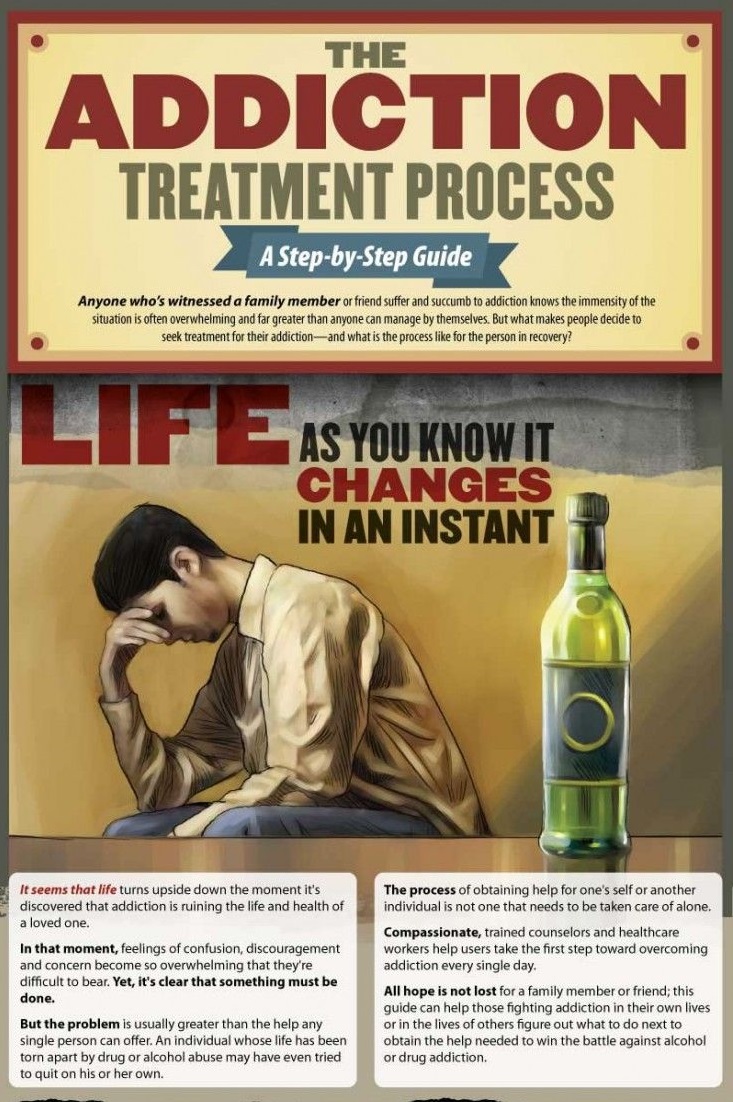
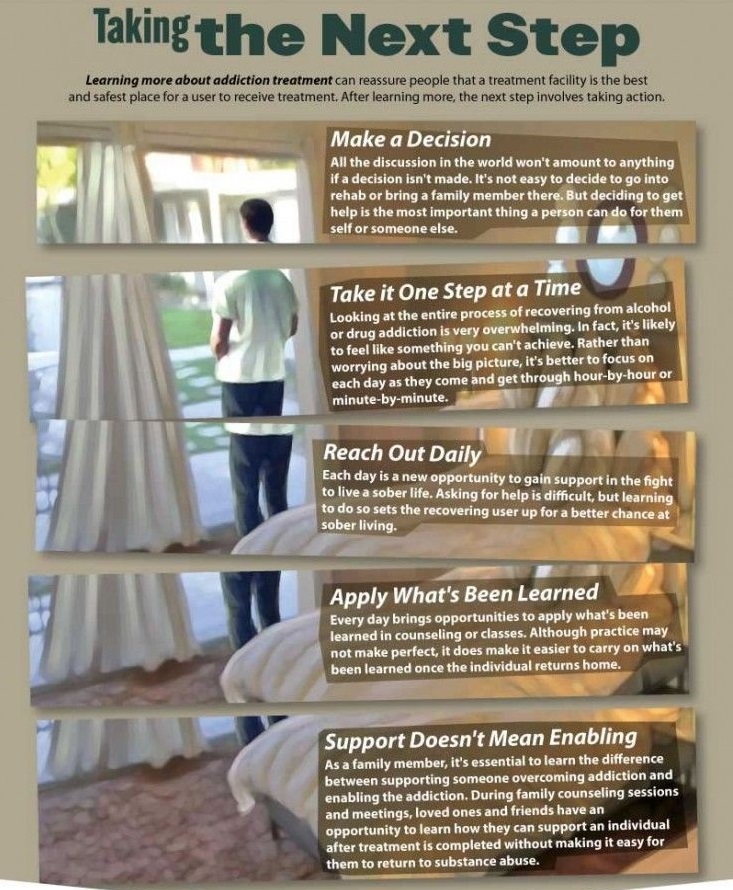
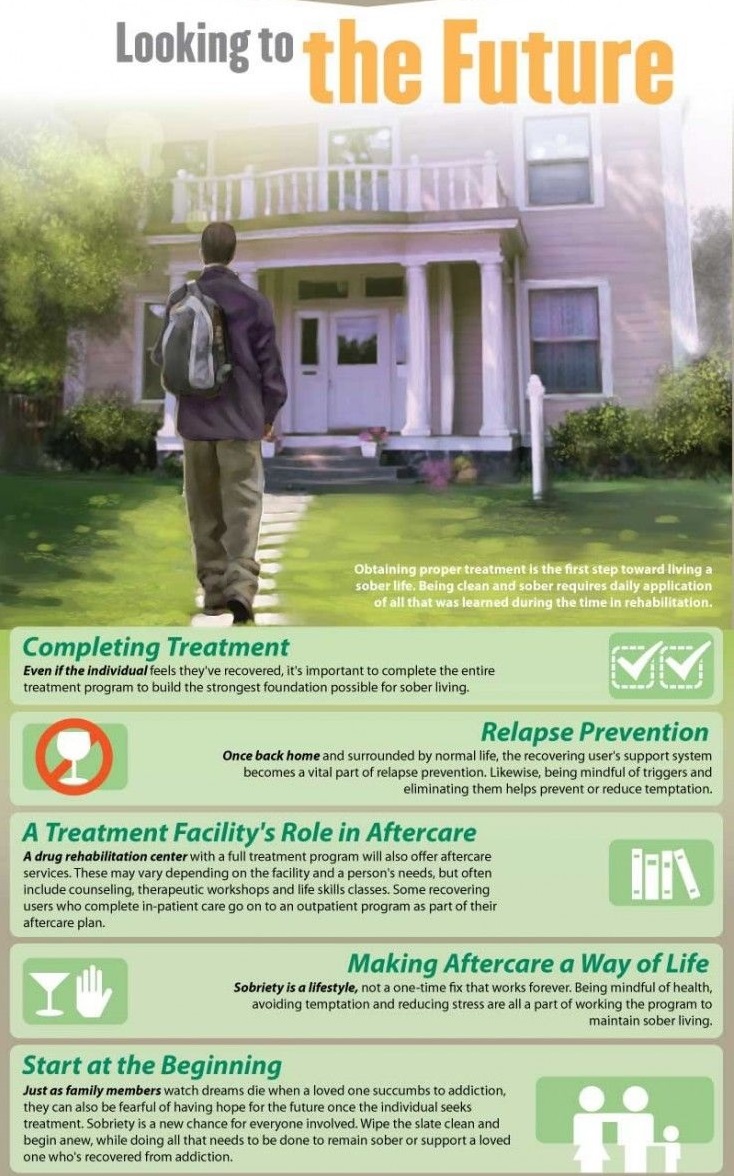
The Addiction Treatment Process: A Step By Step Guide

This is a step by step guide to help you through the addiction treatment process. This is helpful in getting help for a loved one, however, it is only a guide. If you or a loved one needs help finding treatment for addiction, please contact up at 1-800-513-5423 today. www.Addictionnomore.com