Showing posts with label rehab. Show all posts

Wednesday, June 22, 2016

Alcohol Addiction


Alcohol Addiction 

Each year, a typical young person in the United States is inundated with more than 1,000 commercials for beer and wine coolers and several thousand fictional drinking incidents on television.
  1. Alcohol is involved in 50% of all driving fatalities.
  2. In the United States, every 30 minutes someone is killed in an alcohol related traffic accident.
  3. Over 15 million Americans are dependent on alcohol. 500,000 are between the age of 9 and 12.
  4. Each year the liquor industry spends almost $2 billion dollars on advertising and encouraging the consumption of alcoholic beverages.
  5. Americans spend over $90 billion dollars total on alcohol each year.
  6. An average American may consume over 25 gallons of beer, 2 gallons of wine, and 1.5 gallons of distilled spirits each year.
  7. Pregnant women who drink are feeding alcohol to their babies. Unfortunately the underdeveloped liver of the baby can only burn alcohol at half the rate of its mother, so the alcohol stays in the baby’s system twice as long.
  8. Each year students spend $5.5 billion on alcohol, more then they spend on soft drinks, tea, milk, juice, coffee, or books combined.
  9. 56% of students in grade 5 to 12 say that alcohol advertising encourages them to drink.
  10. 6.6% of employees in full time jobs report heavy drinking, defined as drinking five or more drinks per occasion on five or more days in the past 30 days.
  11. The highest percentage of heavy drinkers (12.2%) is found among unemployed adults between the age of 26 to 34
  12. Up to 40% of all industrial fatalities and 47% of industrial injuries can be linked to alcohol consumption and alcoholism.
  13. In 2000, almost 7 million persons age 12 to 20 was a binge drinker; that is about one in five persons under the legal drinking age was a binge drinker.
  14. The 2001 survey shows 25 million (one in ten) Americans surveyed reported driving under the influence of alcohol. This report is nearly three million more than the previous year. Among young adults age 18 to 25 years, almost 23% drove under the influence of alcohol.
  15. Drunk driving is proving to be even deadlier then what we previously know. The latest death statistics released by the National Highway Traffic Safety Administration (NHTSA), using a new method of calculation show that 17,488 people where killed in alcohol related traffic accidents last year. This report represents nearly 800 more people where killed than the previous year.
Read more about Alcohol Abuse HERE


Signs of addiction


  1. Alcohol is the number 1 drug problem in America.
  2. 43% of Americans have been exposed to alcoholism in their families.
  3. Nearly one out of 4 Americans admitted to general hospitals have alcohol problems or are undiagnosed alcoholics being diagnosed for alcohol related consequences.
  4. Alcohol and alcohol related problems is costing the American economy at least $100 million in health care and lost of productivity every year.
  5. Four in ten criminal offenders report alcohol as a factor in violence.
  6. Among spouse violence victims, three out of four incidents were reported to have involved alcohol use by the offender.
  7. In 1996, local law enforcement agencies made an estimated 1,467,300 arrests nationwide for driving under the influence of alcohol.


Give us a call and we cal help you find an alcohol treatment program and help you being your recovery today.  1-800-819-9973


Sunday, December 6, 2015

Christian PTSD Treatment

When our War Heroes come home from service, to our country, often times the transition can be very difficult for them. The comradery and support from friends that have been through the same experiences soon dissipates as they transition back to civilian life. Many of our patriots are left feeling the sense of abandonment when dealing with PTSD. This disorder in not to be taken lightly and needs to be addressed so we can help our vets return to us whole.  Post Traumatic Stress Disorder is not limited to our military personnel but the general public also, not as wide spread, but equally important.  
Having PTSD can trigger other behavioral problems including, but not limited to depression, addiction to drugs or alcohol, panic disorders, and anxiety. The treatment that we have listed below can help deal with all the related conditions as well as the Post Traumatic Stress Disorder. For best treatment results all the problems associated with PTSD, treatment should be handled at the same time to help speed up the recovery process.


Understanding PTSD Treatment
There have been some advances in the treatment for PTSD. When a person has Post Traumatic Stress Disorder, trying to deal with the past can be very difficult. When trying to cope with these issues, some people keep their feelings suppressed, instead of telling others how they feel. Talking with a therapist can help with this condition. 
CBT is one of the types of counseling and therapy that centers use for treating PTSD. Research has proven that this is the most effective treatment and counseling for PTSD. The VA is now offering a few different treatment for this disorder, CPT – cognitive process therapy, PE therapy – Prolonged exposure therapy. Medications and EMRD ( Eye Movement Desensitization and Reprocessing) have been shown to be effective in the treatment for PTSD along with serotonin re-uptake inhibitors (SSRI), also used in the treatment for depression.

PTSD therapy: How long does it last?
PTSD treatment in most facilities last anywhere from 3 to 6 months. Other treatment types have a longer treatment periods, up to 2 years.
What will be worked on while in Therapy?
While in treatment, you and the therapist will discuss options as to the type of treatment that is available to you and what your goals are that you hope to reach.
Reducing your symptoms
Learning how to cope with these symptoms, teaching you how to feel less guilt or sadness associated with PTSD, improving relationships at work and at home is a key to success. Not everyone that has PTSD has the same goals that they want to achieve and some may take longer than others. There is no treatment plan that works for everyone, so it is important to lay out the plan so your individualized program can cover all your concerns. Your therapist will help you decide what goals are most important to you and work on these first.
What can I expect from my therapist or counselor?
When sitting down with a therapist, they should discuss the different types of treatment available to you and work out a plan, that you both agree on. This is the best course of action to take to achieve the goals you have set for treatment. You should also come to an agreement as to what to do if the treatment does not seem to be working: an alternate plan for treatment. 
Make sure that you are comfortable with your therapist as you will be working as a team to help with your problems. It is difficult for most people to talk about painful situations, traumatic experiences, that you have had. This is why we stress the importance of feeling comfortable with your therapist, because you will be talking to them about, often times, painful or traumatic experiences that you have seen or been through in your life. During therapy, feelings can emerge and often times be very extreme, and challenging.
If you do not have a connection with your therapist or feel that they are not helping, talk to another therapist to see if changing your counselor or seeking another option for treatment is the right choice. You should always let your therapist know when you are seeking a second opinion. 
Other types of treatment may include but not limited to:
Group therapy
 We talk and share with people that have very similar experiences and trauma’s. Sharing your experiences with others may make you feel that you are not alone in this fight against PTSD. Some people feel more comfortable sharing their stories only with people that have been through similar experiences. You will learn to deal with your emotions such as anger, guilt, rage, and shame. Learning to put the past behind us so that we can work on the present and the future is the key.
Psycho-dynamic Therapy
This is a type of therapy that teaches us how to deal with emotional conflicts caused by trauma. This therapy helps in the understanding of past events and how we react to those events.
Your counselor will help you:
Locate and identify what triggers the memories and other symptoms 
Raise your self esteem 
Find ways and activities to help with the coping of these intense feelings and emotions.
Become more aware of thought and feelings, so you can change reactions to these thoughts.
What is EDMR?
EDMR is a fairly new treatment for PTSD and there have been discussions and disagreements as to the effectiveness of such treatment. 
While thinking of talking about stressful memories, the therapist helps you focus on other stimuli, hand taps, eye movements, and sounds. They take your focus off of the event by distracting and having you follow hand movements or listen to random sounds. In treatment as the individual attention is taken off of the event on on to other stimulus, has shown promise in helping to change reactions to such memories. 
We now understand that Chemicals in your brain affect the way we feel. When you feel depressed this can be linked to a lack of serotonin in your brain, SSRI’s include Paroxetine (paxil), Sertaline (zoloft) Citalopram (Celexia). There are other drugs that have been know to help with this condition. Please talk to your doctor to discuss medications in the treatment for PTSD.
PTSD can effect your family and friends. When the feeling that no one can possible understand why you get angry, depressed, it can appear that you are under so much stress. Family can often feel scared, withdrawn, and often times guilty due to them not understanding the condition.
A key component of therapy includes family sessions, either through conference calling or at the center. While in family sessions, it is very important to be honest about your feelings and concerns and listen to others. Talking about PTSD symptoms and triggers can help the family or friends understand what brings the condition to the surface.

hotline for drug addiction

Sunday, November 22, 2015

Private Drug Treatment


Private Drug Treatment programs can be expensive, but you will receive the highest quality care and private rooms, at some of the facilities, while receiving treatment for drug or alcohol addiction.

Private recovery centers have a lower staff to patient ratio allowing more one on one treatment to be administered while enrolled in a private treatment program. Having to operate for profit, unlike state run facilities, this makes them accountable to deliver the best results possible. finding a private recovery program in your state or region that fits your needs can be difficult though so it may be necessary to seek private treatment outside of your area. If you are in need of treatment or looking for a private treatment program for a loved one give us a call and we can refer you to the best drug or alcohol treatment program and get you the help you need.

For those struggling with either addiction to alcohol or other drugs there are great private drug rehab center options throughout  the country. Private drug rehabs can be expensive, but you will receive the highest quality care and private rooms at some of the facilities while receiving treatment for drug or alcohol addiction.

Regardless of your financial or social status addiction and the temptation to abuse drugs or alcohol does not discriminate. Once a person gets addicted to drugs or alcohol, there is almost always depression that soon follows addiction and the need for treatment becomes a necessity. While in Treatment at an inpatient private rehab center the client receives scheduled focused treatment plans in an environment that is conducive to the healing process. Private room rehab centers allow for reflection after therapy without the distractions of a roommate. Making the right choice, requires educating yourself, as to which private treatment program is right for you or a loved one.

Choosing treatment options Inpatient treatment vs. outpatient treatment.
If you are looking for treatment for yourself or maybe someone that is close to you having all the facts concerning the addiction can help us determine if there is even a need for inpatient treatment at a private drug treatment program. Residential drug rehab facilities are more expensive and have a minimum time requirement for receiving treatment.

If any or all of these apply to the individual, you should look into private rehab treatments

Long history of drug or alcohol abuse

Failed attempts at inpatient treatment or outpatient treatment

No family or friend support close to the person needing help

Underlying psychiatric condition ( depression, personality disorders, anxiety issues)
need for confidentiality

How do I find an effective residential treatment program that specifically addresses my addiction?


     When evaluating treatment centers it is important to make sure that your addiction can be handled at the facility that you choose. Different drugs can require different treatment models as well as detoxification to make the treatment effective.


                   Call Now, Our counselors are here to help you

                                            1-800-513-5423


 What can be Treated


Inpatient treatment programs set their treatment focus on the two main aspects of treatment:

 Alcohol or drug abuse and behavioral conditions. These two main areas of concern can often times be the reason for the other condition. The first step in the treatment process is detox- Private detox centers help the person by first limiting access to the substance of abuse, often times this can be done without medications and letting the body rid itself of the harmful substance. Medications may be necessary depending on several factors and will be administered to the client in strict scheduled intervals due to the fact that some withdrawal medications can be habit forming. Some drugs like Heroin or opiate based drugs will usually require a full medication assisted detox protocol.


The length of treatment at an Inpatient treatment program


The stay necessary for treatment at a private room rehab program can vary from treatment program to treatment program. Program length is usually  in 30-90 day intervals, with some programs lasting as long as a year. 30 day treatment programs are typically for people seeking treatment that have had no prior attempts or underlying psychiatric conditions.


Traveling for treatment or staying close to home


In some cases traveling for treatment can be a good choice and in other cases it may be a hindrance to the recovery process. Traveling for treatment can be helpful to those seeking complete confidentiality, or just need to get away from the area that they were using in. For those that need an intervention to get them to agree to enter treatment, getting them a plane flight away removes the temptation to check themselves out of treatment before the program is completed.


Paying for a private room treatment program


A obstacle for some people wanting a private room while undergoing treatment for addiction to drugs or alcohol is paying for the treatment . Often times treatment can cost thousands of dollars. Some treatment programs do offer financing options or Insurance may cover most, if not all of the costs associated with treatment at a private facility.


Benefits of receiving private treatment over state funded type treatment centers.


Less conflict and disruptions. A private bed treatment center reserves the right to set their own rules as to the handling of disruptive clients that become hostile towards staff or other patients before there is an incident. A private center has the right to refuse service to patients if it is in the best interest of the center to maintain a high level of respect and peace for those that are dedicated and focused on their own recovery.

    The contact form  is provided free of charge along with our services to help you better understand the options that inpatient treatment centers offer.


Are residential treatment centers confidential?

We have found that some treatment centers are better at confidentiality than others. There are treatment centers that hide their true identity as resorts and vacation rentals to help people that need anonymity. People that need this level of privacy might want to look into these types of programs so no one finds out that they are looking for treatment to handle their drug or alcohol addiction.
Give us a call If you need to locate a private inpatient drug and alcohol treatment center Free of charge
                                                  1-800-513-5423


Tuesday, October 27, 2015

Handling a loved one with Addiction Problems Part 1

How To Handle A Loved One With An Addiction – Part 1


There is no easy way to approach, handle or talk to a loved one struggling with addiction.
If you have an addict in your life, expect it to be difficult, awkward and uncomfortable. There will be good days and bad days, there will be small successes followed by perhaps greater setbacks. You will be pushed to your emotional limit and you will be forced to face your own inability to change a person you love. You will be wholly incapable of making him see that what you want is what’s best for him.

Helping Those Dealing With Addicts

Dealing with addicts isn’t intuitive. We don’t simply discern how to get through to them or how to interact with them based on common sense or reason. While respecting addicts as people, it will help the non-addicts in their midst to understand that reason, good sense, morality and self-preservation are no longer part of a framework within which they operate or a common ground upon which to meet.

How to Handle A Loved One With An Addiction - Part 1 - Copy

But that doesn’t mean we write addicts off as crazy and give up hope. Having been an addict myself, I had a lot of people around me trying to help or cure or fix me in different ways. From the vantage point of recovery, I can now look back and comment on what was helpful and what wasn’t. Even a decade later, I remember how the people around me treated me when I was drowning in the despair of my addiction. While nothing you say will make or break an addict’s chances of recovering, there are ways of communicating and interacting that are harmful and pain-inducing, and there are better, more helpful ways of trying to relate to a person who is indeed quite sick.

What Not To Do When Dealing With An Addict

Guilt Trips

Yes, the addict is making everyone’s life difficult and causing a lot of unnecessary pain and suffering. She breaks plans, she fails to keep her commitments, she is unreliable and unpredictable. And guess what: she already knows it. Asking things like, “Do you realize what you are doing to your mother?” or, “Don’t you understand how you are hurting us?” are not helpful. The addict, though selfish in the extreme, is not oblivious to the pain, difficulty and chaos she is bringing into the lives of those around her. But she is not able to stop it. A guilt trip presupposes that the person being guilted is acting deliberately or out of malice. It assumes that he or she has some control over the offending behavior. An addict does not.

Bargaining

You’ll do anything, make any promise, as long as the addict will agree to stop the addiction and get help. But the addict is powerless to take you up on that offer. The addiction is boss. As appealing as your offer might be, it simply isn’t possible. Addicts are known for high-stakes gambling. They gamble their families, their jobs and anything good they can claim. They know what they have to lose and they do it anyway. They don’t do it because they don’t care; they do it because the illness is in fact that powerful and enslaving.

Endless Pleading And Cajoling

This is also known as nagging and it is never helpful or effective. It’s not that the addict doesn’t care, it’s that she cannot stop what she is doing on the basis of your wishes—even if she wanted to. The disease is a lot stronger than that. It’s a lot stronger than she is. In the end, the addict may tell you what you want to hear, but then go back to business as usual. She knows you think there is a problem. You don’t have to continue to restate it.

Implying Fault Or Agency

Loved ones must burn into their minds that both substance and process addictions are not choices that the addict is making. As a result, blaming addicts or implying that they are practicing their addiction simply because they are selfish and unloving is not only incorrect, but cruel. Understand that the addict is in the grip of something much bigger than him or herself. Addiction is an illness like diabetes or cancer. You may hope that addicts will take the appropriate steps to manage the condition, but it is unhelpful to imply that they do what they do on purpose.

Ignoring The Issue

If there is nothing that can be said to make an addict want to seek help, and if the nagging and the pleading are ineffective, does that mean it’s better to say nothing at all? Is it better to ignore the issue, make the best of it or hope it all just goes away? No. Something does indeed need to be said and maybe even done, but the ways in which you speak and act hold the difference between showing genuine love and support, and being a nuisance and a nag.
While your words and expressions of concern may not effect immediate change in the addict’s life, while they may not leave your chat promising to check into treatment, the addict will benefit from the knowledge that you cared enough to say something out of concern and love. Don’t pretend there isn’t a problem.
If you or a loved one is seeking help for 
addiction, give us a call at 1-800-513-5423 


Monday, October 12, 2015

Prescription Drug Abuse

Prescription Drug Abuse

perscription drug addiction help for christians                                           


How does prescription drug abuse begin ?
Prescription drug abuse begins usually when a person is prescribed a drug by their doctor for a legitimate medical problem. Most people who find themselves addicted to prescription drugs have no history of drug or alcohol abuse. They may take an opiate for pain, a sedative to sleep or a benzo for anxiety, because it makes them feel better. As time goes by, the rate in which the drug works seems less and less, so the frequency of the drug intake gets shorter or the amount that is needed to feel the same way is increased. Soon, the body is needing the drug increasingly more and more. This is where the addiction kicks in.
Most Christians that find themselves needing to handle a prescription drug addiction feel ashamed and helpless, as they need to continue to take the drugs in order to function and live their lives. 
The rate of prescription drug abuse has risen by over 150% since the early 90’s. While these drugs are prescribed by doctors and handed out by pharmacists most people do not understand the drugs can be highly addictive if not taken  as prescribed. The abuse of prescription drugs can be more difficult to detox from than street drugs. Some prescriptions can even have life threatening consequences for those who just stop the use of the drug. 
 DO NOT STOP USING YOUR PRESCRIPTIONS WITHOUT CONSULTING YOUR PHYSICIAN OR DOCTOR
The problem is more widespread than previously thought, recognizing the signs of abuse may save you or a loved one the painful detox from these types of drugs.

Using drugs that are not prescribed to the person taking the drugs.
Prescription painkillers are only meant to be used for the specific reason they are prescribed and the dosage is laid out so there is no problem stopping the drugs. If a person is using a pain killer to just relax, deal with stressful situations or fall asleep, this is a sign that there might be a problem that needs to be handled.
If you see more than one prescription from different doctors or have several different medications to handle the same problem, you may need to look more closely into the problem. Shopping for doctors is a huge sign that there is a problem. Doctor shopping refers to a person going to different doctors in order to gain access to more medications for the same or similar ailment, usually for painkillers or anxiety medications.
Having to get prescription drugs for a source other than a doctor is also a sign of addiction to prescription medication. Often times, you will notice that the medications in the home start to disappear at a more rapid rate than you would expect. Many people that become addicted to painkillers are not getting them from doctors and rely on family and friends for the source of their drugs. They may pay someone for their medications or just take some from the bottle in hopes that it will not be missed.
Confronting someone with concerns over prescription drug abuse can be difficult but the alternative could quite possible be life threatening if  ignored.
 If you suspect that someone that is close to you or even yourself might have a problem with prescription drugs give us a call and we will discuss the options available to you to and get the prescription abuse under control.

hotline for drug addiction

Saturday, September 12, 2015

20 SIGNS YOU’RE BECOMING YOUR BEST SELF

20 SIGNS YOU’re Becoming Your Best Self


By now, you may have realized that you came here on a mission greater than anyone ever told you about growing up.

Some event or person may have woken you up out of a deep slumber, and now you see the world through new eyes. It may feel like you’ve stripped away your camouflaged skin to reveal your true colors – if you need some more clarity about whether you have begun to embody your best self, consider the following guidance.

20 SIGNS YOU’RE BECOMING YOUR HIGHER SELF
1. YOU FEEL MOVED BY SOME GRAND MISSION HERE ON EARTH.
You have awakened to your soul’s calling; you may have recently quit your job or even moved to a new city in order to facilitate your newfound calling. The old paradigm doesn’t resonate with you anymore, and you have released these outdated thoughts to accommodate your soul’s desires.

2. YOU FEEL PHYSICALLY AND MENTALLY LIGHTER.
You might feel alive for the first time in years, because you have begun to accept your most genuine nature. During this time, you may even miraculously recover from chronic ailments, or be drawn to healthier, more nutritious foods to match your new vibration.

3. THINGS BEGIN TO MANIFEST AT LIGHTNING SPEED.
What you truly desire seems to come into your life almost effortlessly, and in much less time than before. The universe sends you assuring signs regularly, whether through songs playing frequently on the radio, meeting the right people at the opportune time, or even in your dreams. Your intentions have been made clear to the universe, and now it’s responding to your energy.

4. YOU ATTRACT EXACTLY WHO YOU NEED TO MEET.
Some people call this your “Soul Family” or “Soul Tribe,” because you meet them and feel like you’ve known them for lifetimes before. In this life, they appear at various stages to help you along your path and reconnect with you to give you comfort and guidance.

5. YOU FEEL TOTALLY COMFORTABLE IN YOUR SKIN.
You don’t have to think about who you are, because you’re simply BEING it. What you act, think, and say form a perfect harmony, and you don’t feel the need to fight your inner self anymore. You let it shine proudly, and people notice.

6. YOU DON’T TRY TO REPRESS ANY EMOTIONS, BUT INSTEAD HONOR THEM.
You no longer feel that your thoughts and feelings own you; you simply observe them and allow them to move effortlessly through you. You realize that people experience many different feelings depending on their moods and situations they encounter, and nurture every emotion that washes over you.


7. YOU NO LONGER SEEK LOVE OR ATTENTION OUTSIDE YOURSELF.
You know that you embody love in the flesh, and realize that love will come to you only when you find it within first. You practice self-love and self-care, and you’ve learned to accept yourself as you are in this moment.

8. YOU’VE GIVEN UP THE VICTIM MENTALITY.
Since we have all come here on Earth due to past life karma, you know that blaming anyone or anything outside yourself will only perpetuate bad karma. You accept all responsibility for your own happiness and choices in life.

9. YOU FEEL THE INTERCONNECTEDNESS OF ALL LIFE.
You see yourself in your fellow humans, lions, tigers, bears, dandelions, trees, and rivers. You know it’s all energy expressed in different forms, and you have learned to honor and respect all life on Earth.


10. YOU KNOW HOW TO BALANCE YOUR OWN ENERGIES.
As you continue to evolve, you may notice that you can attune your energy to the frequency you wish to emit. You have learned to remove any unwanted energies within your body, and may even assist others with balancing their energies as well.

11. YOU HAVE TAMED EGOISTIC DESIRES.
You no longer care to run the rat race of consuming and spending just to inflate your false self and impress others. You know what brings real meaning in life, and feel very detached from material possessions.

12. YOU DON’T CARE WHAT PEOPLE THINK ABOUT YOU.
Now that you feel so confident in your own skin, you don’t need to rely on other’s opinions to bolster your ego. You don’t need anyone’s approval to be you, and you realize that people spread hatred only when they themselves feel insecure. You offer love to them instead of stooping down to their vibrational level.

13. YOU ONLY LISTEN TO YOUR OWN HEART.
You appreciate the opinion of others, but know that only you can make necessary decisions about your life. Only you know what’s best for you, so you don’t let others lead you astray.

14. FEAR DOESN’T HOLD YOU BACK ANYMORE.
You no longer let fear motivate your decisions, and instead feel driven by love and excitement. You realize that fear is only an illusion, and trust your highest self to guide you in the right direction.

15. YOU DON’T IDOLIZE LEADERS.
You have become your own guru, and know that only you hold the answers which you seek. You may have learned from these leaders, but see the same potential within yourself to teach and be taught.

16. YOU SPEAK YOUR TRUTH, EVEN IF IT ISN’T POPULAR.
You know that the real truth has been buried beneath piles of lies for years now, and feel obligated to share the knowledge you’ve gained. People may laugh or dismiss your words as ludicrous conspiracies, but you press on without faltering. You have a duty to awaken the masses, and stand firmly in your beliefs.

17. YOU FORM BETTER, DEEPER RELATIONSHIPS.
As your relationship with yourself improves, so do all the other ones in your life. Communication gets easier, and you spend more time laughing and hugging with friends and family than you did before.

18. YOU HAVE A NEWFOUND PASSION FOR LIFE.
Maybe you once felt like a zombie, aimlessly walking through a dismal existence. Now, you feel vibrant, excited, and moved to live your best life with every breath you take.

19. YOU SPREAD HAPPINESS AND LOVE TO OTHERS.
Instead of putting people down to appease your ego, you lift others up so they will feel better about themselves. This does not hurt your ego, but it nourishes your soul. You have helped yourself, so you now know how to help others.

20. ABUNDANCE GREETS YOU IN ALL AREAS OF LIFE.
You suddenly find ways of making money that you never saw before, which allows you to buy healthier foods and live a higher quality life. The universe has rewarded you for living your truth, and this financial freedom enhances your own life as well as the lives of everyone around you.

SOURCE 

Monday, June 15, 2015

Clean And Sober by Janet Mullaly

Clean And Sober 

by Janet Mullaly

Staying clean and sober
is the way i want to be
But it is not so simple
As you can plainly see

For some of us it takes some time
To master all the steps
To recognize our problems
even harder to accept

Patience is a virtue
in fact, it is a must
So I'll believe in a Higher Power
and in him I'll put my trust.

A spiritual awakening
is what it's going to take
if it's clean and sober
my life I wish to make. 


Thursday, June 11, 2015

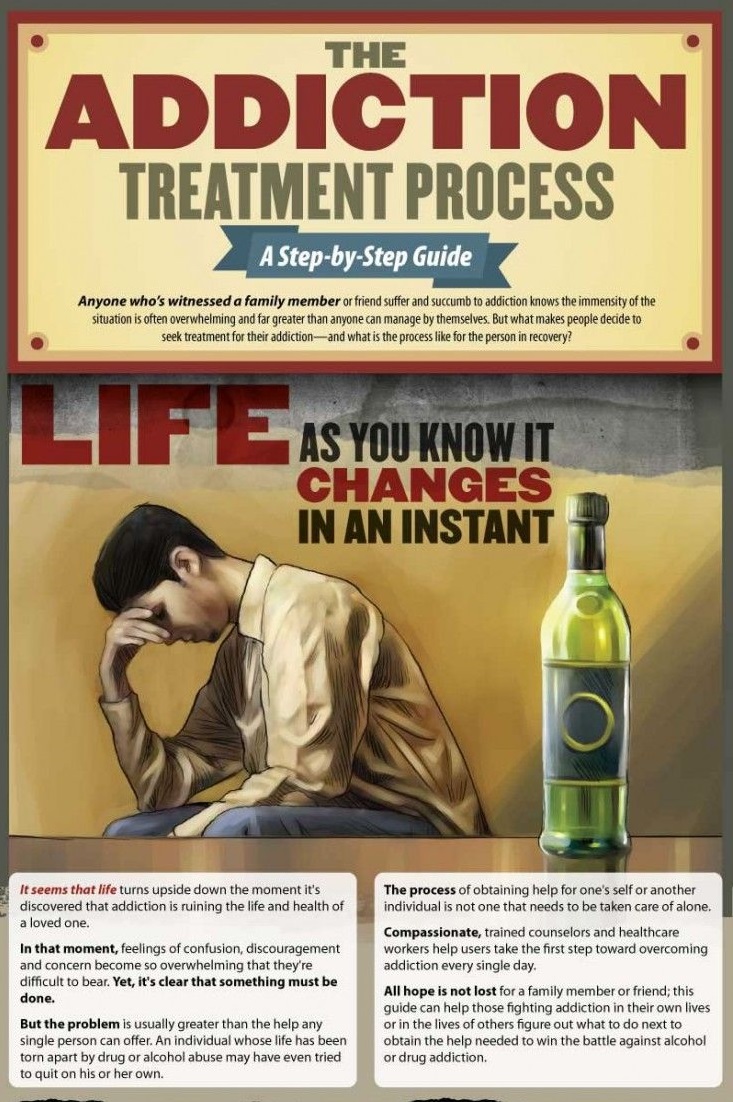
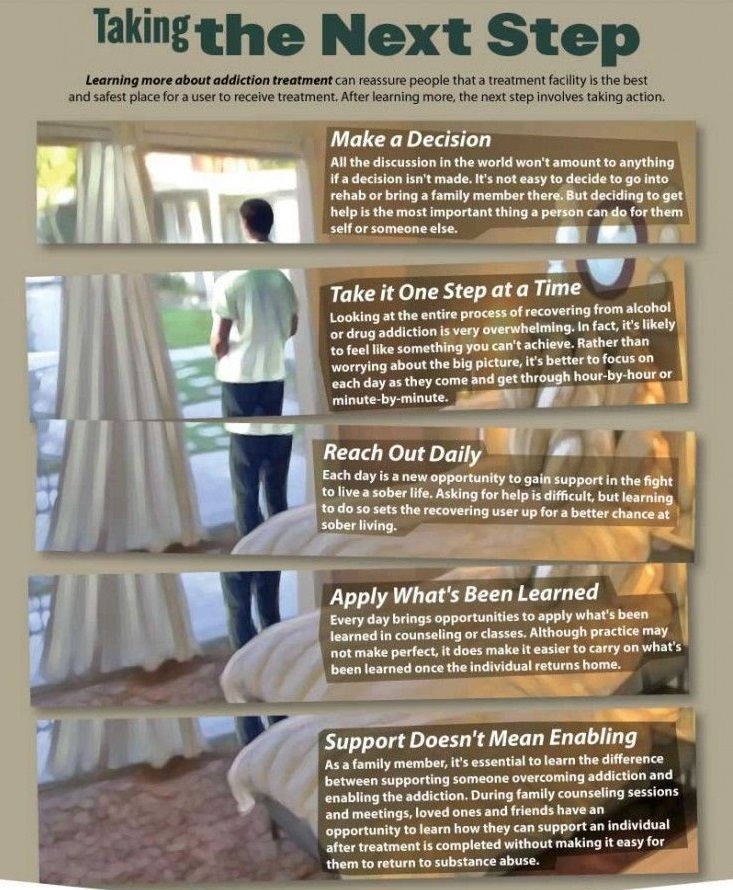
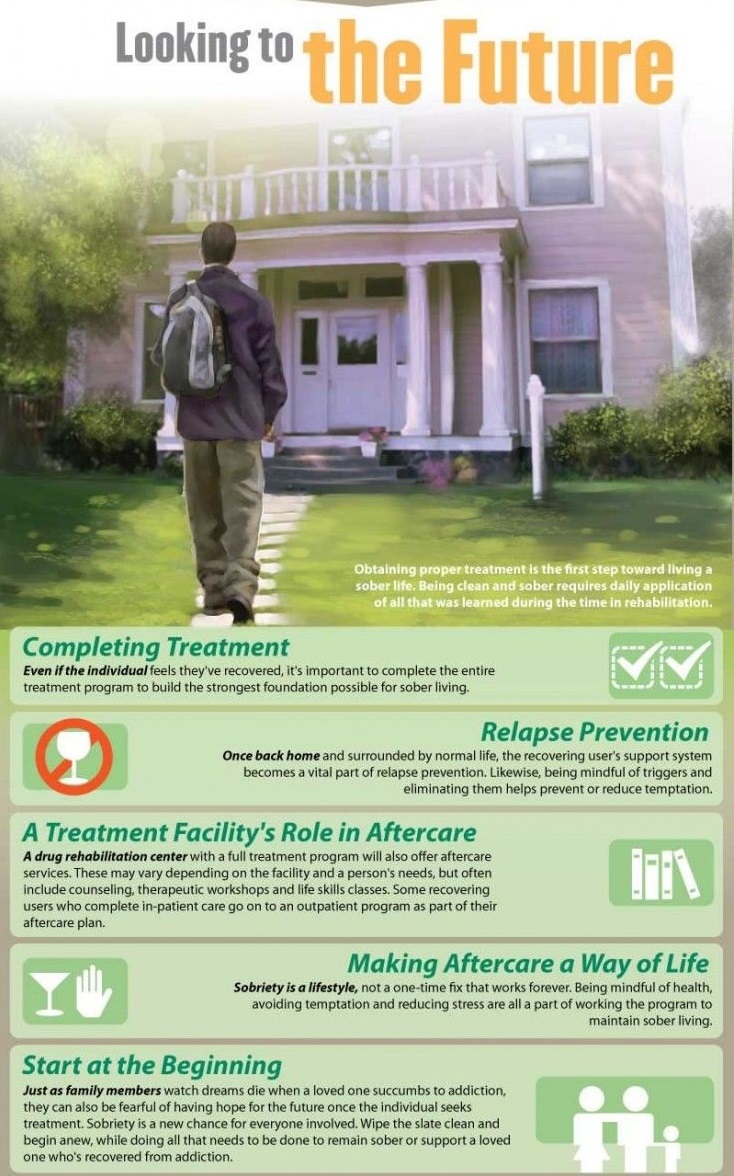
The Addiction Treatment Process: A Step By Step Guide

This is a step by step guide to help you through the addiction treatment process. This is helpful in getting help for a loved one, however, it is only a guide. If you or a loved one needs help finding treatment for addiction, please contact up at 1-800-513-5423 today. www.Addictionnomore.com